 Agemica
Join the mission
Agemica
Join the mission Machine learning
Machine learning and neural networks-in plain language for practitioners.
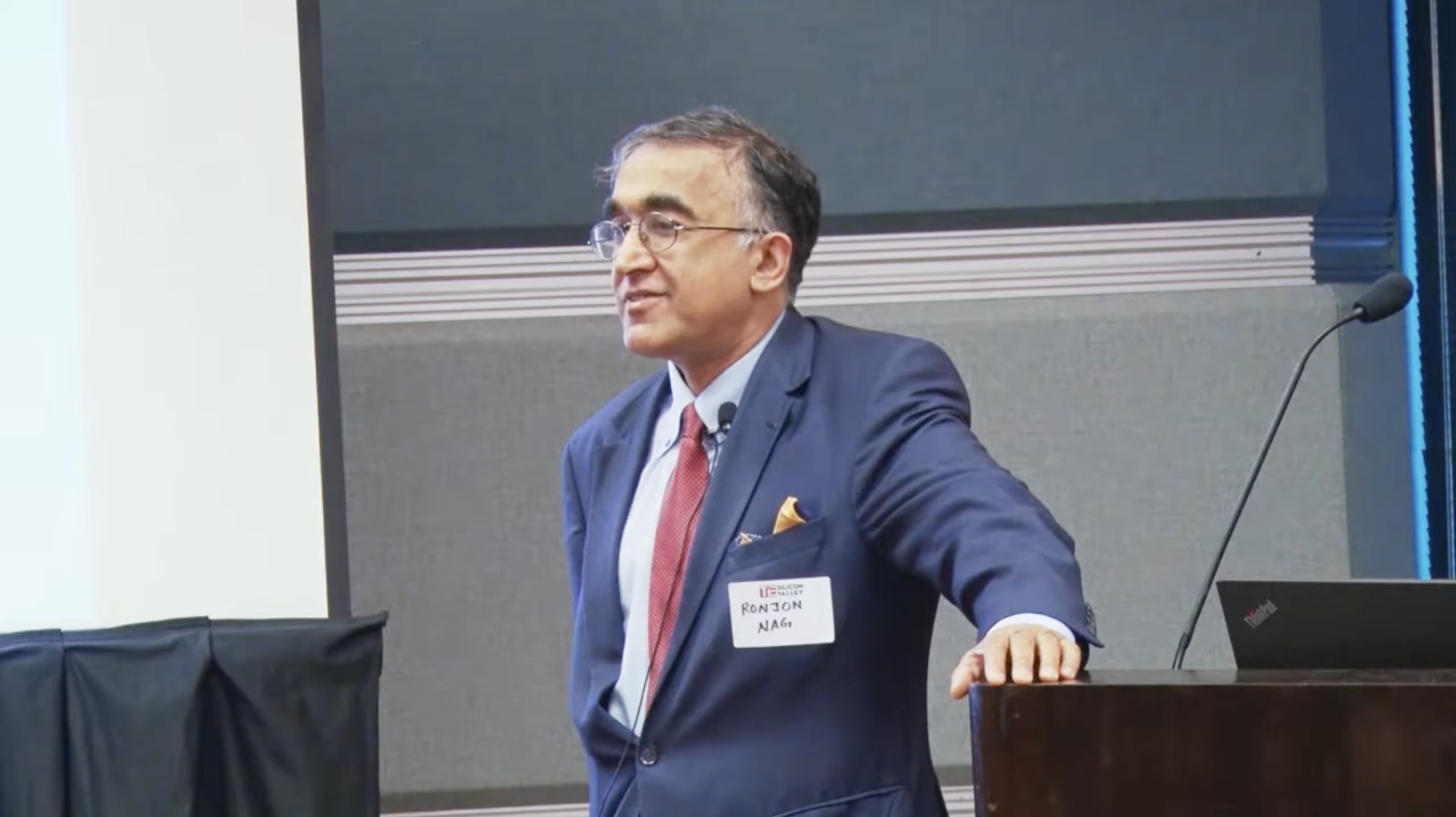
Key takeaways
Key topics covered in this session.
- The talk separates AI reality from hype, including why extreme AI narratives and 'AI predicts everything' claims are often misleading.
- It gives historical context: decades of neural network research, earlier rule-based AI, and repeated boom-bust cycles ("AI winters").
- It defines common terms clearly: AI, machine learning, neural networks, deep learning, narrow AI, and the difference from hypothetical AGI.
- It explains the main learning paradigms: supervised learning, unsupervised learning, and reinforcement learning.
- It uses familiar applications (assistants, recommender systems, and autonomous-driving systems) to show that most deployed systems are narrow and task-specific.
- The objective is model literacy: enough understanding to evaluate technical claims and practical limits without marketing language.
Methods
Core technical concepts discussed.
- Perceptrons, multilayer networks, and activation functions (including ReLU) are presented as the basis of modern deep learning.
- The XOR example is used to show why nonlinear models are needed beyond simple linear decision boundaries.
- Training is described through backpropagation and gradient descent as an iterative error-minimization process.
- The workflow includes feature engineering, data wrangling, and train/validation/test splitting to reduce overfitting risk.
- The talk highlights why recent breakthroughs were enabled by scale: larger datasets and high-performance compute, especially GPUs.
- It distinguishes expensive training from relatively cheap inference, and notes that model architecture and tuning remain partly empirical in practice.
The relevance to Agemica is practical: better AI literacy helps separate real discovery infrastructure from hype, especially when applying machine learning to biology, therapeutics, and longevity.